We tested the same whale prompt across 3 AI image generators, then pushed one concept into 10+ wildly different art styles — from pixel art to Chinese embroidery to cyberpunk cityscapes.
February 21, 2026
•By VibeArt Team•
12 min read
•— views
Key Takeaways
The same detailed prompt produces dramatically different results across AI image models — composition, color handling, and detail fidelity all vary.
z-image-turbo excels at cinematic lighting and photorealistic textures. Gemini 2.5 Flash leans painterly and atmospheric. Gemini 3 Pro balances realism with artistic interpretation.
A single subject (a whale) can generate 10+ completely distinct artworks through creative prompt engineering — from pixel art to Chinese embroidery to cyberpunk cityscapes.
Iterative prompt refinement across models is the fastest way to find your ideal visual style. Tools like VibeArt let you run these comparisons side by side on a single canvas.
Why Comparing AI Image Models Actually Matters
If you have ever typed a prompt into an AI image generator and thought "this is fine, but not what I imagined," you are not alone. The gap between what you describe and what you get is not just about your prompt — it is about the model interpreting it.
Different AI image models have different training data, different architectures, and different aesthetic biases. One model might nail photorealistic lighting but flatten stylized art. Another might produce gorgeous painterly textures but struggle with precise composition. The only way to know which model fits your creative vision is to test the same prompt across multiple models and compare the results directly.
That is exactly what we did. We took a single concept — a majestic whale — and ran it through three AI image generators on VibeArt's canvas. Then we pushed that concept through 10+ radically different art styles. Here is everything we learned.
(If you are new to multi-model comparison, our AI Image Models Compared article covers the fundamentals with different test subjects.)
The 3-Model Showdown: Same Prompt, Different Visions
The Prompt
We started with a detailed, production-quality prompt designed to test each model's ability to handle underwater lighting, volumetric effects, particle systems, and large-scale subject rendering:
A majestic blue whale gliding through bioluminescent deep ocean waters,
surrounded by glowing particles of light in deep navy (#001F5B) and
electric cyan (#00FFFF). The whale's enormous silhouette is illuminated
from below by ethereal god rays piercing through dark water. Tiny air
bubbles trail along barnacled skin, conveying profound scale and silence.
Photorealistic underwater photography, volumetric lighting, cinematic
composition.
This prompt is intentionally dense. It specifies exact hex colors, lighting direction, surface detail (barnacles, bubbles), mood (silence, scale), and technical style (photorealistic, volumetric, cinematic). A good model should handle all of these cues. A great model should make them feel cohesive.
Model 1: z-image-turbo
Strengths: z-image-turbo delivered the most photorealistic interpretation of the three. The volumetric god rays feel physically accurate — light scatters through the water column the way it does in real underwater photography. The bioluminescent particles read as individual points of light rather than a generic glow. The whale's skin texture shows barnacle detail and the subtle mottling you would see on an actual blue whale.
Character: This model leans toward "National Geographic cover shot" energy. It treats the prompt as a photography brief and executes it with technical precision. If you need an image that could pass as a photograph, z-image-turbo is the strongest choice in this test.
Model 2: Gemini 2.5 Flash
Strengths: Gemini 2.5 Flash took the same prompt in a more painterly direction. The light diffusion is softer, almost dreamlike. Where z-image-turbo rendered sharp god rays, Gemini 2.5 Flash let them bloom and bleed into the surrounding water. The bioluminescent particles feel more atmospheric — less like distinct points of light and more like the water itself is glowing.
Character: This model reads prompts with an artistic interpretation layer. It sacrifices some photographic precision for mood and atmosphere. For concept art, book covers, or any context where emotional resonance matters more than realism, this rendering has a distinct advantage.
Model 3: Gemini 3 Pro
Strengths: Gemini 3 Pro landed between the other two models. It maintained more detail than Gemini 2.5 Flash while incorporating a slightly more artistic color palette than z-image-turbo. The composition feels deliberate — the whale's positioning, the distribution of bioluminescent particles, and the balance of light and shadow all suggest a model that is thinking about the image as a complete composition rather than a collection of requested elements.
Character: Gemini 3 Pro is the generalist. It does not have the extreme photorealism of z-image-turbo or the painterly softness of Gemini 2.5 Flash, but it produces consistently strong results that work across use cases. If you are generating images for a project where you need reliable quality without committing to a specific aesthetic, this is the model to start with.
Comparison Summary
Aspect
z-image-turbo
Gemini 2.5 Flash
Gemini 3 Pro
Realism
Highest
Moderate
High
Atmosphere
Technical
Dreamlike
Balanced
Color accuracy
Closest to hex specs
Artistic interpretation
Faithful with warmth
Best for
Photography, product shots
Concept art, editorial
General purpose, versatile
Speed
Fast
Fast
Moderate
Creative Prompt Engineering: One Whale, Ten Worlds
After the model comparison, we wanted to answer a different question: how far can you push a single subject with prompt engineering alone? Using z-image-turbo as our base model, we generated eight wildly different whale artworks — each exploring a completely different art style, medium, and mood.
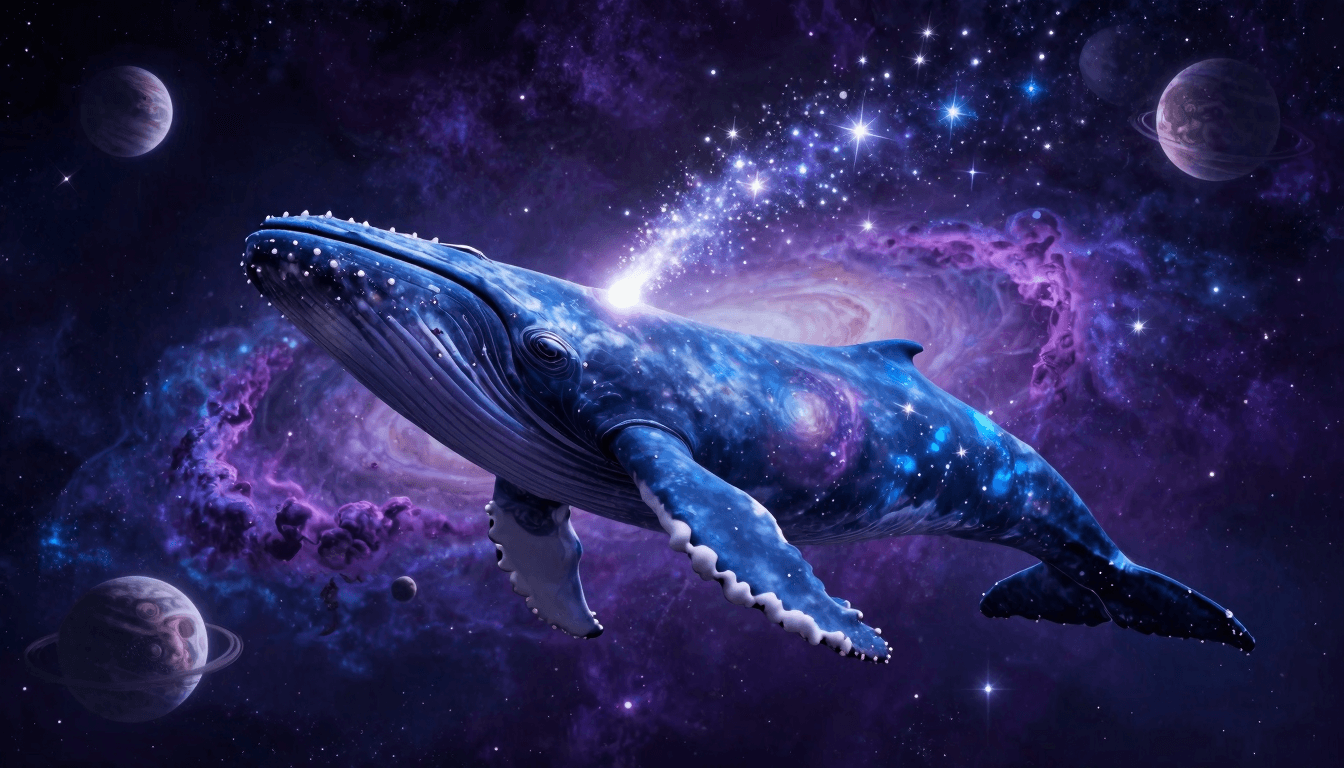
Cosmic Whale
A colossal blue whale swimming through a vivid nebula in deep space
instead of water. Galaxy patterns and star clusters swirl across its
skin. Its blowhole erupts a comet tail of stardust. Surrounding planets
and moons drift past. The whale IS the cosmos. Cinematic digital art,
deep purples (#1A0033) and cosmic blues (#0044FF), breathtaking scale.
The key technique here is environment swap — taking a subject out of its natural context and placing it somewhere impossible. "Swimming through a nebula instead of water" forces the model to reconcile whale anatomy with cosmic physics, and the result is something neither "whale" nor "space art" would produce alone.
Cyberpunk City Whale
A giant whale floating through clouds with a full cyberpunk city built
on its back — neon-lit skyscrapers, flying cars, holographic billboards,
tiny citizens unaware they live on a living creature. The whale drifts
calmly above a sunset horizon. Blade Runner aesthetic, neon pinks
(#FF007F) and electric blues (#00FFFF), aerial cinematic view.
This prompt uses scale juxtaposition — a city built on a whale's back — combined with a specific film reference (Blade Runner). Naming concrete aesthetic references gives the model a strong style anchor. Notice the prompt also includes a narrative detail: "tiny citizens unaware they live on a living creature." Storytelling cues like this often produce more interesting compositions than purely visual descriptions.
Chinese Embroidery Whale
A blue whale rendered entirely in traditional Chinese embroidery style,
silk thread textures, gold thread (#FFD700) outlining the body, intricate
hand-stitched ocean waves in deep teal and jade green, on aged ivory
fabric background. Qing dynasty palace craft aesthetic, ornate border
of embroidered lotus flowers and clouds. Ultra detailed textile art.
Medium transfer is one of the most powerful prompt engineering techniques. Instead of describing a whale in water, we described a whale as if it were a physical textile artwork. The prompt specifies the material (silk thread), the technique (hand-stitched), the historical period (Qing dynasty), and the substrate (aged ivory fabric). The more specific you are about the craft, the more convincing the result.
Double Exposure Forest
Fine art double exposure photography: a whale silhouette filled entirely
with an ancient misty forest and cascading waterfall inside. Black and
white with a single ethereal teal (#008080) color accent. The whale
shape contains mountains, pine trees, fog. Background is pure white.
Medium format photography aesthetic, profound and poetic.
This technique combines photographic process simulation (double exposure) with selective color. The prompt constrains the palette to black and white with a single teal accent, which forces the model to create visual hierarchy through tone and texture rather than color. The result feels like something you would see in a gallery, not a typical AI generation.
Surrealist Street Photo
Hyperrealistic surrealist street photography: the lower half of a
massive blue whale is submerged in dark ocean, while the upper half
breaks through the surface hovering silently above a dense modern city
skyline at dusk. Pedestrians on streets below stare upward in awe.
Golden hour lighting, photorealistic, National Geographic style,
jaw-dropping scale contrast.
The impossible realism approach: describe something physically impossible but insist on photorealistic execution. The tension between the surreal scenario and the "National Geographic style" directive pushes the model to make the impossible feel plausible. Including human observers ("pedestrians stare upward in awe") gives the viewer a scale reference and adds emotional weight.
8-bit Pixel Art
Retro 8-bit pixel art in original Game Boy 4-color green palette
(#0f380f #306230 #8bac0f #9bbc0f). A pixelated whale swimming in a
pixelated underwater world with blocky coral and pixel fish. Vintage
game UI border with HP bar and score counter. CRT screen scanlines
overlay. Pure nostalgia, crisp pixel edges, no anti-aliasing.
Extreme style constraint works by locking the model into a very specific, limited visual language. Specifying the exact four-color Game Boy palette, prohibiting anti-aliasing, and requesting CRT scanlines gives the model almost no room for its default tendencies. The result is a faithful pixel art piece rather than a "pixel art flavored" digital painting. The game UI elements (HP bar, score counter) sell the illusion.
Whale Skeleton
Dark fairy tale: a colossal whale skeleton resting peacefully on the
deep ocean floor, centuries old. Through its giant rib bones,
bioluminescent jellyfish and vibrant coral colonies bloom in electric
blue and pink. Small glowing fish drift through the eye socket. Life
emerging from death. Tim Burton meets ocean documentary. Hauntingly
beautiful, dark teal atmosphere.
Narrative contrast — "life emerging from death" — gives the model a thematic tension to resolve visually. The Tim Burton reference provides a tonal anchor (whimsical darkness), while the "ocean documentary" reference keeps it grounded in naturalism. This dual-reference technique is useful when you want something that is stylized but not cartoonish.
Hokusai Cyberpunk
Hokusai Great Wave woodblock print composition but cyberpunk remix:
towering neon-lit skyscrapers replace Mount Fuji in the background,
glowing holographic advertisements on the wave crests, a massive neon
whale (#FF00FF magenta) riding the wave crest. Japanese ukiyo-e ink
line texture meets Blade Runner neon colors. Woodblock print grain,
flat graphic style.
Art historical remix takes a specific, well-known artwork and applies a genre transformation. The model knows what the Great Wave looks like, so you can give targeted modification instructions. The key is specifying what to keep (composition, line texture, grain) and what to change (color palette, background elements, added subject). This technique works best with universally recognized artworks.
Advanced Technique: The Four Seasons Whale
The final set in our canvas demonstrates iterative prompt refinement across models — writing a complex prompt, testing it across models, then evolving the concept based on what each model does well.
Version 1: The Falling Whale (z-image-turbo)
Epic digital painting: a colossal blue whale falling diagonally from the
sky, viewed from the side. Its massive body transitions seamlessly left
to right through all four seasons — the leftmost section blooms with pink
cherry blossoms and fresh green sprouts (#FFB7C5), merging into a lush
summer rainforest with waterfalls cascading off the whale's back (#228B22),
shifting into amber autumn maple leaves and golden fields (#D2691E),
ending in the rightmost section frozen in winter snow and ice crystals
(#B0E0E6). Life bursts from every inch of its skin. The whale falls
through a dramatic ocean of clouds far below, suggesting immense altitude.
Painterly cinematic style, god rays, awe-inspiring scale, rich color
gradients, ultra detailed.
This first version establishes the core concept: a whale as a living canvas for all four seasons. The "falling from the sky" composition adds drama and gives the model a clear spatial direction for the seasonal gradient.
Version 2: Swimming Whale (Cross-Model Comparison)
After seeing the falling whale result, we refined the prompt to position the whale horizontally and added more specific detail to each seasonal section. Then we ran it through both Gemini 2.5 Flash and Gemini 3 Pro:
A colossal whale swimming horizontally through a dramatic ocean, its
entire body serving as a living canvas for all four seasons transitioning
left to right. Leftmost: spring — cherry blossom petals drift through the
water around it, tender green shoots and flowers bloom directly from its
skin (#FFB7C5 pink, soft greens). Center-left: summer — lush tropical
vines and moss carpet its back, vibrant corals and glowing sea plants
explode from its sides (#228B22). Center-right: autumn — golden maple
leaves swirl through the water, amber and rust tones saturate its skin,
warm harvest light (#D2691E). Rightmost: winter — frost and ice crystals
coat its tail, bare white branches emerge, snowflakes suspended in cold
blue water (#B0E0E6). Each season bleeds softly into the next. The
surrounding ocean water mirrors each season's color. Breathtaking epic
digital painting, cinematic god rays, rich detail, painterly realism,
16:9 wide composition.
Gemini 2.5 Flash result:
Gemini 3 Pro result:
Comparing these two: Gemini 2.5 Flash produced softer, more blended seasonal transitions — the seasons merge into each other like watercolors. Gemini 3 Pro created more distinct seasonal zones with richer color saturation and sharper boundaries between sections. Depending on your intent, either approach could be the "better" result.
Version 3: The Transparent Whale (Final Evolution)
The most ambitious iteration combined the four seasons concept with a transparent body and a dramatic downward plunge:
Gemini 2.5 Flash result:
Gemini 3 Pro result:
This final version shows what happens when you push prompt complexity to its limit. The concept demands transparency rendering, internal ecosystem detail, directional movement, particle dissolution effects, and dramatic lighting — all simultaneously. Both models handled the complexity, but with different emphasis. This kind of iterative refinement, running the same evolved prompt across multiple models and comparing outputs, is where AI image generation stops being a slot machine and starts being a creative tool.
What We Learned
After generating 16 images across three models and a dozen art styles, a few things stand out:
Model selection is a creative decision, not a technical one. There is no "best" AI image model. z-image-turbo, Gemini 2.5 Flash, and Gemini 3 Pro each have a distinct personality. The right model depends on what you are making, not which one benchmarks highest.
Prompt engineering is art direction. The difference between a generic AI image and a striking one is almost never the model — it is the prompt. Specifying materials, naming art historical references, including narrative details, constraining palettes, and defining spatial relationships all give the model better instructions to work with.
Comparison is the workflow. Generating a single image in a single model is guessing. Generating the same prompt across multiple models, then iterating on the best result, is a process. The canvas format — where you can see every variation side by side — makes that process tangible.
Try It Yourself
Every image in this article was generated on a single VibeArt canvas. You can view the original session, see the full prompts, and compare the results at full resolution.
If you want to run your own multi-model comparisons, VibeArt supports z-image-turbo, Gemini 2.5 Flash, Gemini 3 Pro, and more — all on the same infinite canvas. Generate, compare, iterate, and export from one workspace.
Start with a subject you love. Write a detailed prompt. Run it across three models. See what surprises you.
For more prompt inspiration, check out our GPS Time Machine technique (the simplest prompt format that produces the most stunning results) or our Z-Image Turbo Prompt Guide for 20 real-world prompt examples.